How to Market Dental Implants Without Competing on Price
Dental implant clinics that lead with price attract the worst patients and train the market to devalue their work. The practices growing on implants are doing something different. Here's what.
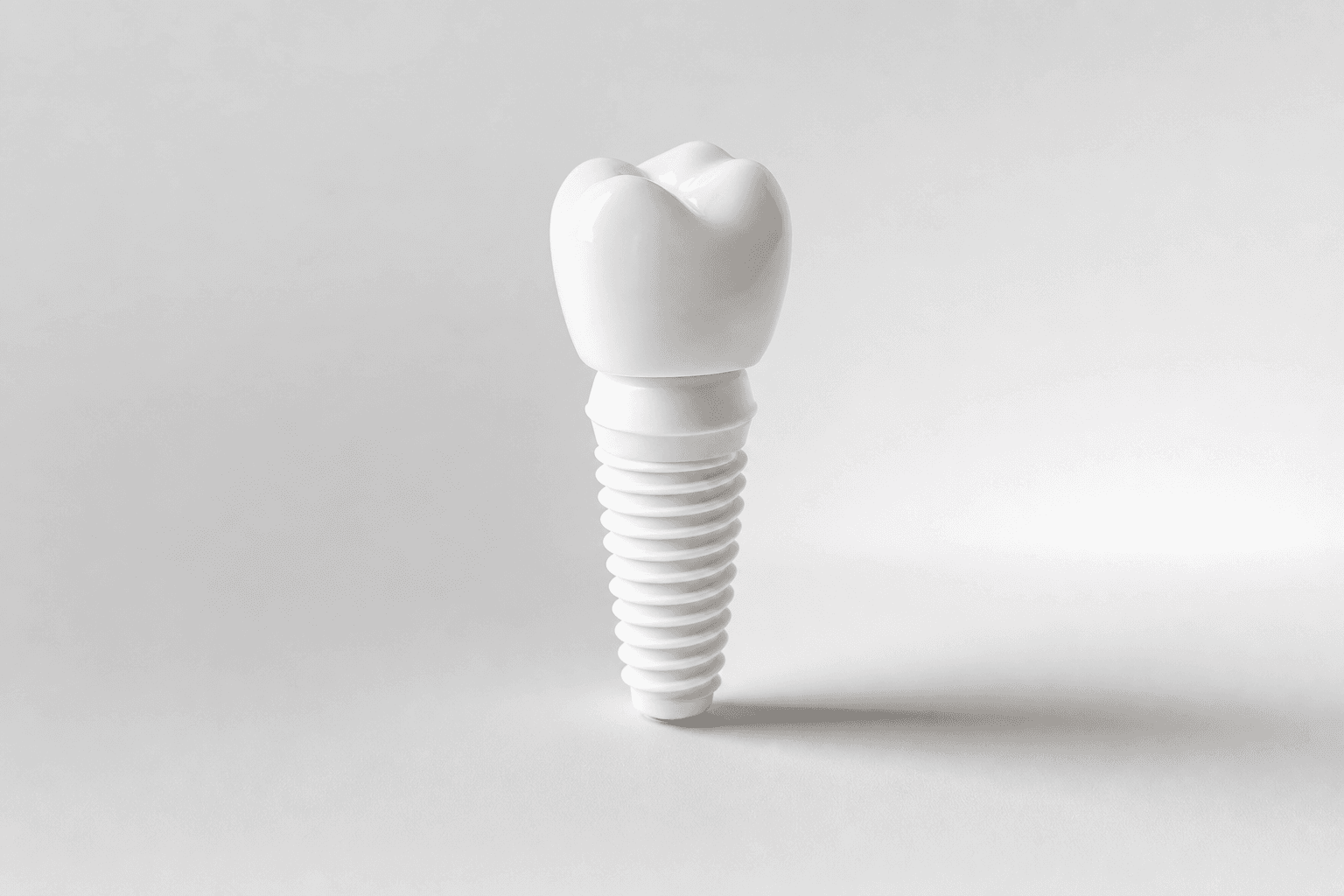
Dental implant clinics that compete on price attract patients who will price-shop again at every stage: the consultation, the treatment plan, the crown selection, the implant brand. They cancel and reschedule. They go to Turkey for the abutment. They leave one-star reviews when they perceive any deviation from their budget expectation. These are not the patients that grow a quality implant practice. And they're the inevitable result of price-led marketing.
The practices growing sustainably on implants — full-arch restorations at $25,000–$40,000, single implants at $4,500–$6,000, complex cases that require bone grafting and sinus lifts — are marketing on something entirely different. Not features, not brand, and not price.
What implant patients actually buy
Patients choosing dental implants are not buying a titanium screw and a porcelain crown. They're buying the end state: eating without thinking, smiling without self-consciousness, talking to people without worrying about their breath. They're buying freedom from dentures, or from a gap they've been embarrassed by for 8 years. The implant is a means to an outcome — and the outcome is emotional, not functional.
The practice that markets the outcome, not the procedure, positions itself differently from the first impression. 'Eat what you want, smile without thinking — implants that look and function like natural teeth' positions the practice in the patient's life, not in a product comparison. 'Dental implants from $2,500' positions the practice in a price race with the 40 other clinics running the same Google Ad.
The 5 things high-quality implant patients research before calling
Implant cases are high-stakes, high-cost decisions. Patients research extensively before making first contact — often for 2–4 months. During this research phase, they're evaluating specific things:
- The dentist's specific implant experience. Not 'experienced in implants' — the number of cases, the type of cases (single tooth vs full arch), advanced techniques (bone grafting, zygomatic implants, immediate loading), and postgraduate training. They're asking 'is this person qualified enough for a procedure I'm going to live with for 25 years?'
- Before/after results. They want to see work that looks like what they want for themselves — specifically. A patient considering full-arch restorations needs to see full-arch cases, not single implant results.
- The implant systems and materials used. Sophisticated implant patients research implant brands. Straumann, Nobel Biocare, Osstem — they know the difference, or they learn it during research. A practice that uses budget implant systems and doesn't mention it online is creating a credibility gap when the patient asks at consultation.
- What other patients experienced. Not star ratings — the specific emotional experience. 'I was terrified going in but felt completely safe throughout' from a review is worth 50 generic 5-star reviews for converting anxious high-ticket patients.
- The treatment timeline and process. Implant treatment is a multi-month commitment. Patients want to understand the stages, the waits, the temporary options, the risks, and the recovery. A website or article that explains the full journey in plain language builds more trust than any level of credential display.
How to build the marketing infrastructure for quality implant patients
The implant procedure page (the most important page on your website)
Your dental implant page should be 1,500–2,500 words. It should cover: what implants are (in plain language, not clinical language), who is a suitable candidate, the treatment process step-by-step, realistic timeline from assessment to final crown, what bone grafting or sinus lifts are and when they're needed, the implant systems you use and why, pricing (ranges, what affects cost, finance options), your surgeon's specific experience, before/after photos for this specific procedure, patient testimonials specific to implants, FAQs with schema markup, and a clear consultation CTA.
This page accomplishes two things simultaneously: it ranks in search for implant-specific queries (because it's the most complete, specific, and useful page Google will find for 'dental implants [city]'), and it pre-educates the patient to the point where they arrive at the consultation already convinced — they just need to confirm you're the right fit. These consultations convert at 2–3x the rate of consultations from patients who haven't read your content.
The before/after gallery: procedure-specific
Your before/after gallery needs to be filterable by procedure type. A patient considering full-arch implants who sees a portfolio full of single-tooth cases and veneers cannot evaluate whether you're the right choice for them. Each result needs: a description of the starting situation (missing teeth, failing denture, trauma), the treatment delivered, the timeline, and where possible a patient quote about the outcome. Anonymised is fine — the story matters more than the name.
The free consultation as a positioning tool
A free implant consultation positioned correctly is a powerful qualifier. Position it as a comprehensive assessment, not a sales meeting: '60-minute consultation including digital X-ray review, bone density assessment, digital smile design, full treatment plan with transparent pricing, and no obligation to proceed.' This positions you as an advisor, not a salesperson — and it attracts the exact patient who wants expert guidance, not the patient who's calling 6 clinics to get the cheapest quote.
The content that intercepts patients during research
Implant patients search for information long before they search for clinics. They're Googling: 'how long do dental implants last', 'dental implants vs dentures which is better', 'can I get implants if I have bone loss', 'are dental implants painful', 'how much do dental implants cost in [city]', 'All-on-4 vs traditional implants'. Each of these queries is an opportunity to be the most useful, specific, credible voice they find.
An article that answers 'dental implants vs dentures — the honest comparison for patients who want a permanent solution' targets a patient who is already seriously considering implants and wants expert comparison of their options. That patient, having found your article comprehensive and honest, is 4–6x more likely to book a consultation with you than with a competitor who's never engaged with their research questions.
Articles that work for implant patient acquisition
- 'How much do dental implants cost in [city]? The honest 2026 guide' — addresses the most searched implant question with real numbers and honest guidance on what drives cost variation.
- 'All-on-4 vs All-on-6 vs traditional implants — the comparison patients need' — positions you as an expert advisor on a complex decision.
- 'Can I get dental implants if I have bone loss? What the assessment shows' — addresses the specific anxiety that many implant patients have.
- 'What to expect at your dental implant consultation — a step-by-step guide' — reduces consultation anxiety and pre-qualifies serious patients.
- 'How long do dental implants really last? What 20 years of research shows' — the longevity question that every serious patient asks.
The review strategy for implant practices
Implant patients who had a good experience are among the most motivated reviewers you'll encounter — because the outcome has materially changed something about their life. A patient who can eat comfortably for the first time in 4 years, or who smiles without self-consciousness for the first time since losing a tooth in their 30s, is emotionally primed to share that experience.
Request the review at the crown fitting appointment — not the implant placement. This is when the transformation is complete and visible. The patient has the final result in their hands (or their mouth). The emotional peak is at its highest. Ask the review request to focus on their outcome: 'When you write it, if you're comfortable, it would really help other patients to hear about what the result has meant for you — not just the treatment itself.'
Building the full implant marketing infrastructure — procedure page, before/after gallery, content library, review system, and GBP optimisation — is what the first 90 days of the OWAO retainer covers for implant-focused practices. If you want to understand what your current patient acquisition looks like for implants specifically, the free audit at owaoconsulting.com includes a competitive landscape analysis alongside the website and GBP assessment.
Written by JJ
OWAO Consulting
Free clinic audit
Want to know exactly where your clinic is losing patients online?
I’ll audit your GBP listing, your website conversion path, your review profile, and your local search visibility — and send you a specific report on what to fix first.
Request Your Free AuditNo call required. Report delivered by email within 48 hours.